

Blog

As tolling needs to become more intelligent, think IQ

  • Blog
  • News
  • Press Releases

20 May, 2016

The ITS and Tolling market have traditionally developed technologies such as ANPR in-house in order to preserve a level of competitive differentiation and control. This is from a time when only heavy-weight ANPR cameras and separate computing platforms were able to meet requirements of high speed multi-lane highways. However, technology evolves and the latest ITS/Tolling systems are now multi-sensor solutions that combine a growing number of sensory inputs alongside the ANPR to provide accurate and reliable classification and identification.

ANPR is a critical element of the solution and is now operated alongside radar, LIDAR, thermal, optical, Bluetooth, in-road weight and tyre sensors. The true worth of a modern ITS/Tolling system is based on how these many disparate technologies can be integrated into a homogeneous solution and delivered on-time and profitably.

In this new world, the role of the ITS/Tolling experts is increasingly differentiated by how they combine the mass of information from these multiple sources of data and their delivery of this data to their end customer. Forward thinking companies now embrace collaboration and close partnerships that are available with industry leading sensor experts to take their solutions forward.

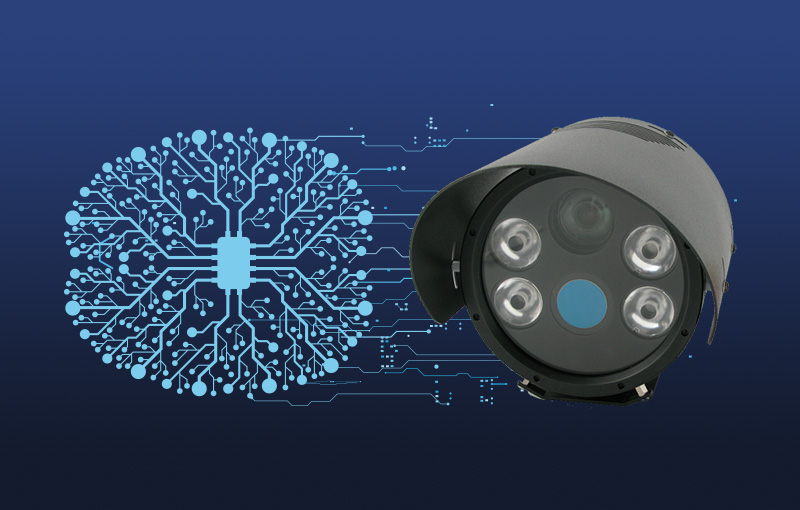
The real breakthrough in treating ANPR as a sub-system rather than a core component has been the advent and recent domination of the latest intelligent ANPR cameras. The best of these are not just housings that combine the traditional ANPR system elements into one box. Instead, leading intelligent ANPR cameras take direct image sensor output into DSPs and/or FPGA front-ends and perform ANPR on raw image data with great accuracy.

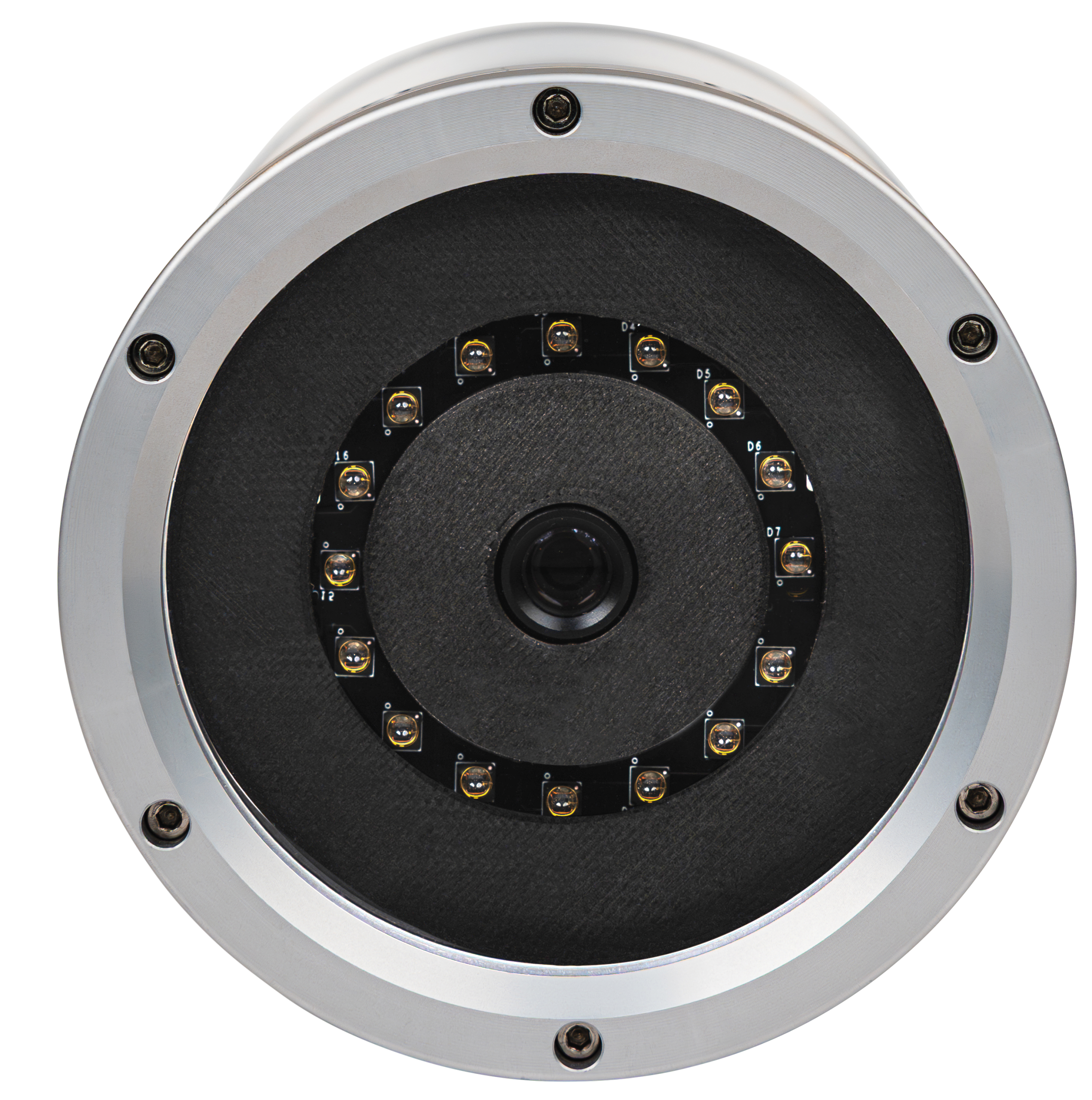
It is with this background that MAV Systems Ltd, a UK manufacturer and designer of ANPR cameras, offers their core technology as an OEM building block to the ITS/Tolling market. To date, ANPR cameras from third parties have been discrete components having their own physical enclosures, cabling, brackets, power management and communication requirements. However, in an OEM configuration, the partners of MAV can access the core hardware/software of their IQ range and build this within a complete ITS/Tolling solution. Not only does this work at a technical level, but also through the solution’s packaging, it can be provided as a branded device that can be put through approvals and supplied on a long-term basis to meet branding as well as QA aspects.

Outsourcing the ANPR aspects of the ITS/Tolling solution makes sense for the focus of engineering resources. Often, considerable amounts of time and money are spent by development teams on optimising ANPR within their ITS/Tolling system. Choosing quality led ANPR cameras removes this necessity, allowing focus to be centred on effective integration of all components. By partnering with a specialist, wholly dedicated to the ongoing improvement of their ANPR, that element of the solution can be relied upon to offer superior performance and often, when costed objectively, offers lower life-time costs.

MAV Systems produce their IQ range of intelligent ANPR cameras as stand-alone packaged units but, because of their almost unique position as a niche business-to-business supplier, they have the skillset to provide customised versions of their standard products as OEM building blocks.

The IQ range has inbuilt front-end processing of the images on dedicated low-power/high performance chipsets. This means that despite having high resolution/frame rate sensors, the dataflow from the ANPR sub-system can be reduced to a fraction of the raw data needed when ANPR processing is performed using conventional PC based ANPR engines and machine vision cameras. By performing the ANPR at the edge of the system, there are benefits throughout the system with reduced data-rates on communication links, reduced EMC issues, reduced power consumption and, most importantly, a scalable architecture that is truly fit for purpose.

Ongoing product development is inherent within the ANPR sector and driven by competition and customer demands. By tagging onto this development momentum, the ITS/Tolling market can yield immediate benefits in performance. As advances in image sensors, LED lighting or ANPR algorithms are proven elsewhere, ITS/Tolling partners can slot in a new sub-system that inherits all the proven advances without any of the development costs or lead-times that would normally be required. In this ideal partnership, the ITS/Tolling company has essentially gained an ongoing ANPR R&D team for free.

MAV’s IQ range provides ITS/Tolling companies with a golden opportunity to embrace a more modular architecture. The intelligent ANPR camera sub-system provides access to more than just vehicle registration and images. The IQ provides a depth of metadata that can be used to verify and augment the other sensory inputs. For example, plate tracking data can be matched with radar/LIDAR and triggers from other equipment can be used to catch vehicles with no plates or those that have disguised their vehicles in an attempt to avoid detection.

Providing such features in ANPR cameras is the next evolutionary step needed to meet the growing needs of ITS/Tolling Systems. It is only through these technological innovations that current objectives can be met and only through collaborative partnerships can future objectives be identified. The on-going success of these systems is dictated by the quality of the individual elements and their providers. With ANPR playing a pivotal role in system performance it is becoming increasingly important to choose an ANPR partner that has the ability to start the evolution rather than replicating it.

Blog

The IQ Test

  • Blog
  • News
  • Press Releases

20 May, 2016

ANPR cameras are playing a pivotal role in transport management and ‘big data’ collection systems. Continual development of this technology provides further opportunities for efficient and effective uses for ANPR as a sensor input to smart highway infrastructures.

The emergence of a new breed of ‘Intelligent ANPR cameras’ such as the MAV IQ range has opened opportunities that previous generations of ANPR precluded. Through such technological advancements, successful partnerships between ANPR camera manufacturers and data back-office system providers have been forged to offer solutions of superior performance. The advancements in intelligent ANPR cameras have addressed the restrictions that were previously faced and allowed ANPR to be used where previously it would have been impractical.

Intelligence at the Edge
Many systems are using IP streaming to support their data processing needs and questions have been raised as to the benefits of choosing Intelligent ANPR cameras as a replacement. Intelligent ANPR cameras, such as MAV’s IQ range, provide the opportunity to process ultra-high quality images without any triggers by constantly monitoring vehicle movements to provide higher levels of accuracy and only sending required data rather than constant streams. Edge based technology, as found in the MAV IQ, ensures the processing power is instant and allows for the distribution of computing power to where the system requires it. Creating an intelligent ANPR camera with this level of quality ensures the highest levels of efficiency and performance. These benefits can be enhanced for even smarter systems, meeting the needs of Smart Cities, with the addition of pollution profiling, traffic occupancy modelling, and real time journey time analysis to name but a few.

Flexibility Needed
Flexibility is essential and as such the new generation of ANPR cameras has been developed to support dynamic systems by providing remote control over networks. The MAV IQ range includes zoom lenses, image targeting, iris control, directional traffic reporting, pan and tilt control through an optional expansion module and much more. All these features can be accessed and controlled remotely via an online portal, allowing for carefully controlled configuration for each camera location. All these remote facilities avoid the need and costs associated with lane closures or traffic disruption caused if site visits are required.

Communication is Key
Many ANPR cameras only offer limited metadata outputs, even the commonly specified UTMC is a ‘lowest common denominator’. It is also usual for cameras to only have one usable channel for data extraction. This limits the analysis options and efficiency of data management by placing restrictions on system operators access to the underlying intelligence that has been collected. Advancements in technology found in Intelligent ANPR cameras like the MAV IQ range have overcome these limitations with the inclusion of JSON outputs which increases the analytic capabilities of the system and supports developer adaption and data management. Furthermore, the IQ supports a number of parallel data extraction channels which allows for efficient and simultaneous export of differing data to meet each objectives and requirements of multiple systems. Such advantages allow for metadata retrieval without plate image to meet immediate data processing needs whilst images are stored for later export. This, along with many further bespoke instructions, are the reason the IQ Intelligent ANPR cameras is chosen for use in next generation systems.

Storage capacity and export selection
System partners who choose Intelligent ANPR cameras such as the MAV IQ are benefiting from storage capacity of more than 1,000,000 plate reads and can also access a selection panel via their camera’s portal to choose the parameters that will be exported and what specific date range it is retrieved over. Allowing such control and providing this level of storage ensures reliability, accuracy and timely integration of full ITS management requirements.

Powerful but not power hungry
The latest generation of Intelligent cameras has been designed to improve all aspects of performance including the level of power consumption required. The MAV IQ range requires a nominal 14W to run all features and perform to the highest standards. Many previous generations of intelligent cameras consumed up to four times as much power with lower performance. As a consequence, older technology was more prone to overheating and cannot show levels of reliability seen with the MAV IQ. This means cost of ownership is reduced and also allows for deployment with a battery pack for extensive periods of time ‘off-grid’. Power consumption is an important aspect that is often overlooked but has an impact on cabling, installation costs and the environment, as well as system operator budgets, especially over a longer period of time.

One size does not fit all
You may find that many businesses claim their ANPR cameras can be all things to all people but those with true knowledge of ANPR know that this is not the case. Each project, site and system has specific requirements that are never the same. Choosing ANPR cameras which do not offer multi-level control and remote management restricts the performance and longevity of any system. Providing such levels of control and offering tailored options are why Intelligent ANPR cameras, such as the IQ, are increasingly being chosen. Supporting system partners with multi-lane/single lane options, expansion boards for peripheral devices such as radar, pan and tilt and barrier control, image masking for concentrated capture and a fully configurable Intelligent camera portal is why the IQ is setting new benchmarks for performance. The ability to define your own parameters and configure set up in line with each location requirements is of paramount importance to the accuracy, efficiency and overall effectiveness of data management systems. Accurate In, Accurate Out is the new paradigm.

Evolution
The evolution of ANPR cameras ensures that the technology is always moving forward to offer partners more options and opportunities. The current generation of Intelligent ANPR cameras is quickly becoming an imperative inclusion or upgrade of older systems that increasingly restrict the use of meaningful ANPR data across multiple platforms. This, however, is just a snapshot in the ongoing development of such cameras. There are more challenges to overcome which will provide system partners with even greater control and functionality. This is why market leaders in ANPR, like MAV Systems, are constantly investing in research and development that explore new techniques and widen the market for Intelligent ANPR cameras.

What are we missing?
The biggest opportunity in the market today is for system integrators to make better use of Intelligent ANPR cameras to achieve their full potential rather than working with what they have. Beyond the obvious applications, intelligent cameras, such as the IQ, provide a wealth of prospects which are largely untapped. Further applications include:

• Speed detection through combined radar interface
• Modelling of junctions for deeper congestion analysis
• Vehicle make identification and model classification
• Enforcement of traffic regulations
• Combined solutions with People Counting sensors
• Vehicle weight/dimension analysis through secondary sensor interfaces
• Vehicle impact studies on the local environment

Beyond these and many further applications, MAV’s roadmap will soon launch an IQ that acts as a computing platform for third party applications to be loaded onto the camera that meet the precise needs of any given project or site.
The renowned 20th century inventor, Charles F Kettering once said “Our imagination is the only limit to what we can hope to have in the future”. This is true in most aspects of life and especially in the use of Intelligent ANPR technology. Through collaboration of open-minded professionals, there are no limits to what can be achieved, we can increase the IQ of Smart cities and smart systems.

As feature in SMART HIGHWAYS MAGAZINE

Find out more about MAV IQ Cameras